Collaboration as Care: Working Together Around Families
Collaboration as Care: Working Together Around Families
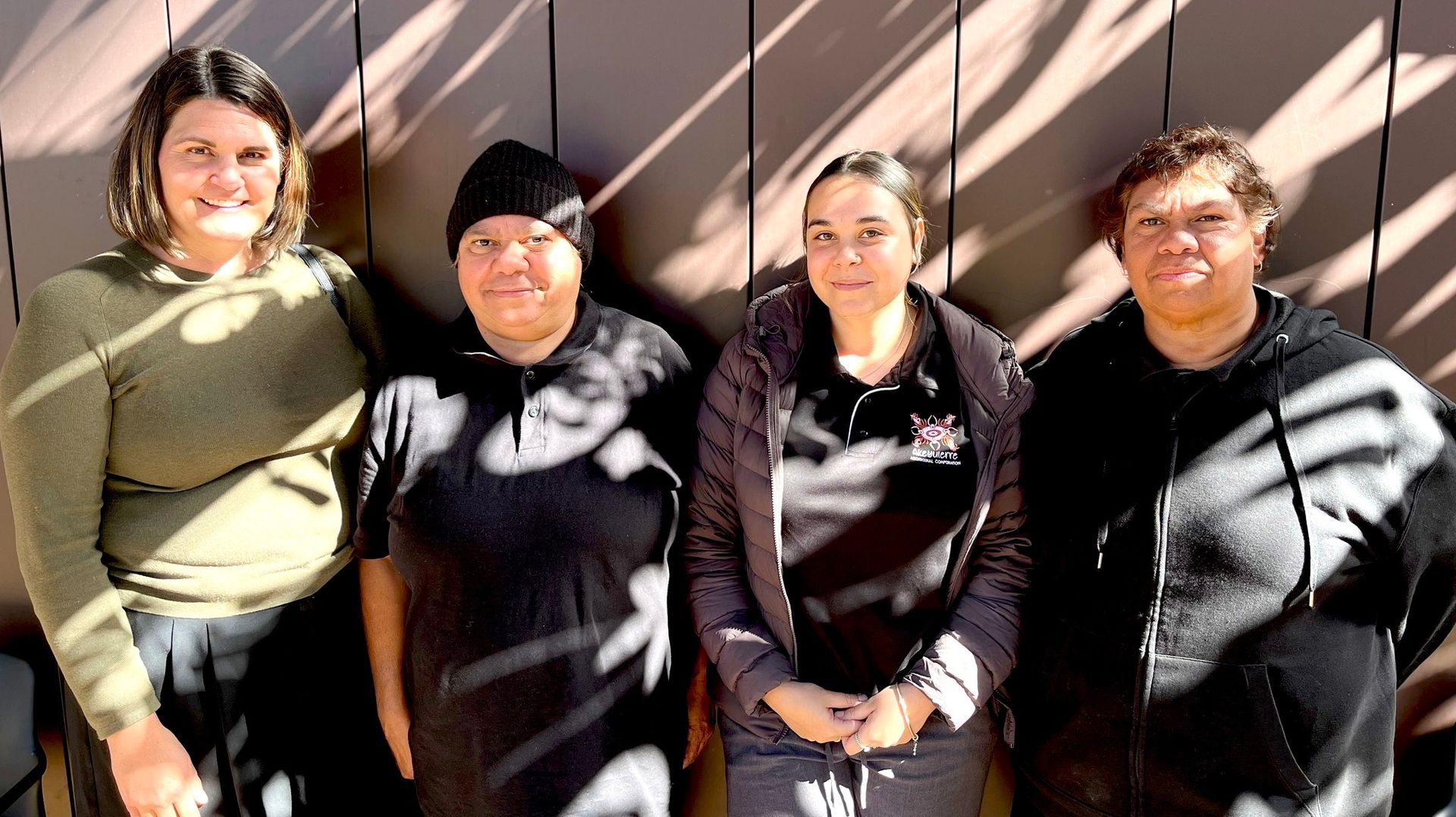
Families navigating child protection and legal systems are often doing so at moments of deep stress and uncertainty. Appointments, paperwork, court dates and decisions can all arrive at once, layered over experiences of trauma, fatigue, and fear. This is why, at Akeyulerre, we run a Family Support Service that is client-led, Arrernte-led, place-based and grounded in cultural safety. Our work begins with listening. Families guide what they want to focus on, at their own pace, and in ways that make sense for their lives. We know that strong outcomes don’t come from services working alone. They come from relationships, between families, workers, and services walking alongside one another. Our collaboration between Akeyulerre’s Family Support Services (FSS) and the Central Australian Women’s Legal Service (CAWLS) offers a clear example of what this way of working can look like in practice.
Working Together: What Effective Collaboration Looks Like in Practice
From a legal perspective, Elise Gooley, a civil generalist lawyer at CAWLS, speaks about collaboration as something deeply human. “For me, it always starts with picking up the phone,” Elise reflects. “As soon as you hear someone’s voice, it changes everything. You both become more real to each other.” In legal work, written communication can often feel constrained: careful, formal, and distant. Direct conversations, however, create space for trust to grow. When Elise began working alongside our Family Support Services, early phone conversations helped establish a shared understanding: that we would keep each other informed, work together, and support families as a team. In child protection matters, where housing, health, transport, parenting support and legal processes are all intertwined, this coordination is essential. “Knowing that Family Support Services are supporting families across those practical and emotional areas meant I could focus my energy on the legal work,” Elise explains. “It eases pressure for everyone.” Not just lawyers or case workers, but families too.
Letting Families Lead: Our Client-led Approach
At Akeyulerre, our Family Support Services are built around a client-led approach. We don’t arrive with a fixed checklist. We start by listening to what families want, what they’re ready for, and what matters most to them right now. From Elise’s perspective, this approach changes how families engage with legal processes. “When families don’t feel pushed or judged, they’re more willing to engage,” she says. “Trust builds slowly, but once it’s there, you see people gain confidence.” That trust is created through small, consistent practices: paying attention to body language, allowing silence, noticing hesitation, and respecting when someone isn’t ready to talk yet. “At the same time, it’s about following through,” Elise explains. “When clients see that you do what you say you’ll do, that’s when they start to open up.” And we see this every day at our work. Trust doesn’t come from rushing; it comes from walking alongside.
Why Aboriginal Community Control Matters
Aboriginal community control is not just a principle; it shapes how families experience support, and Elise reflects on the broader history that makes this so important. “For a long time, people’s autonomy was taken away,” she says. “Community-controlled services are about restoring empowerment, supporting people to build skills and confidence, rather than doing everything for them.” Legal processes eventually come to an end. But families continue to move forward. That’s why our role at Akeyulerre is all about supporting families to strengthen their own capacity, whether that’s navigating systems, making decisions, or planning for what comes next.
The Importance of Place: Offering a Safe Space at Akeyulerre
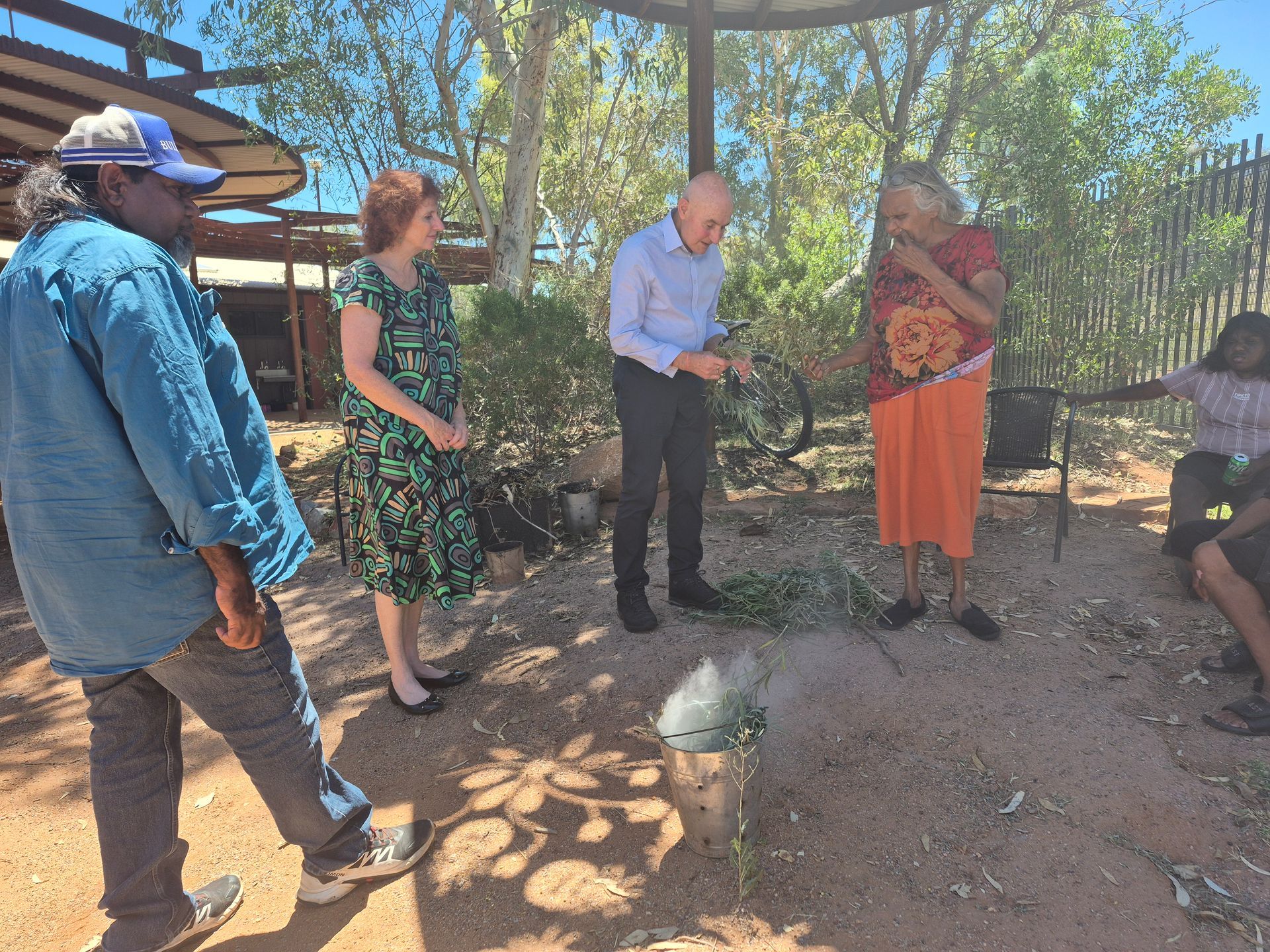
One of the key elements of this collaboration has been the ability for access or visits to take place in a community-controlled, culturally safe space at Akeyulerre, rather than a statutory office. “The environment makes a real difference,” Elise shares. “Community spaces feel less intimidating. Families are more relaxed, and the focus can return to connection”. Safety, comfort and familiarity are not extras. They are central. “Feeling comfortable isn’t a soft issue,” Elise says. “It directly affects how people engage.”
Making Place-based Practice Visible
In recent years, “place-based” has become a common term used to highlight the importance of context and culture. While it can sound abstract, for Elise its meaning becomes clear the moment you step into Akeyulerre. “You see it in the Arrernte staff, in the relationships that already exist, in how the space feels,” she reflects. “The art, the openness, the warmth, it doesn’t feel clinical.” Place-based practice also means flexibility and understanding. “If someone doesn’t return a call, it’s not immediately seen as disengagement,” Elise explains. “There’s curiosity. Maybe something else is happening, sorry business, family responsibilities, being out bush.” Rather than closing doors, this approach keeps them gently open.
A Shared Way of Working
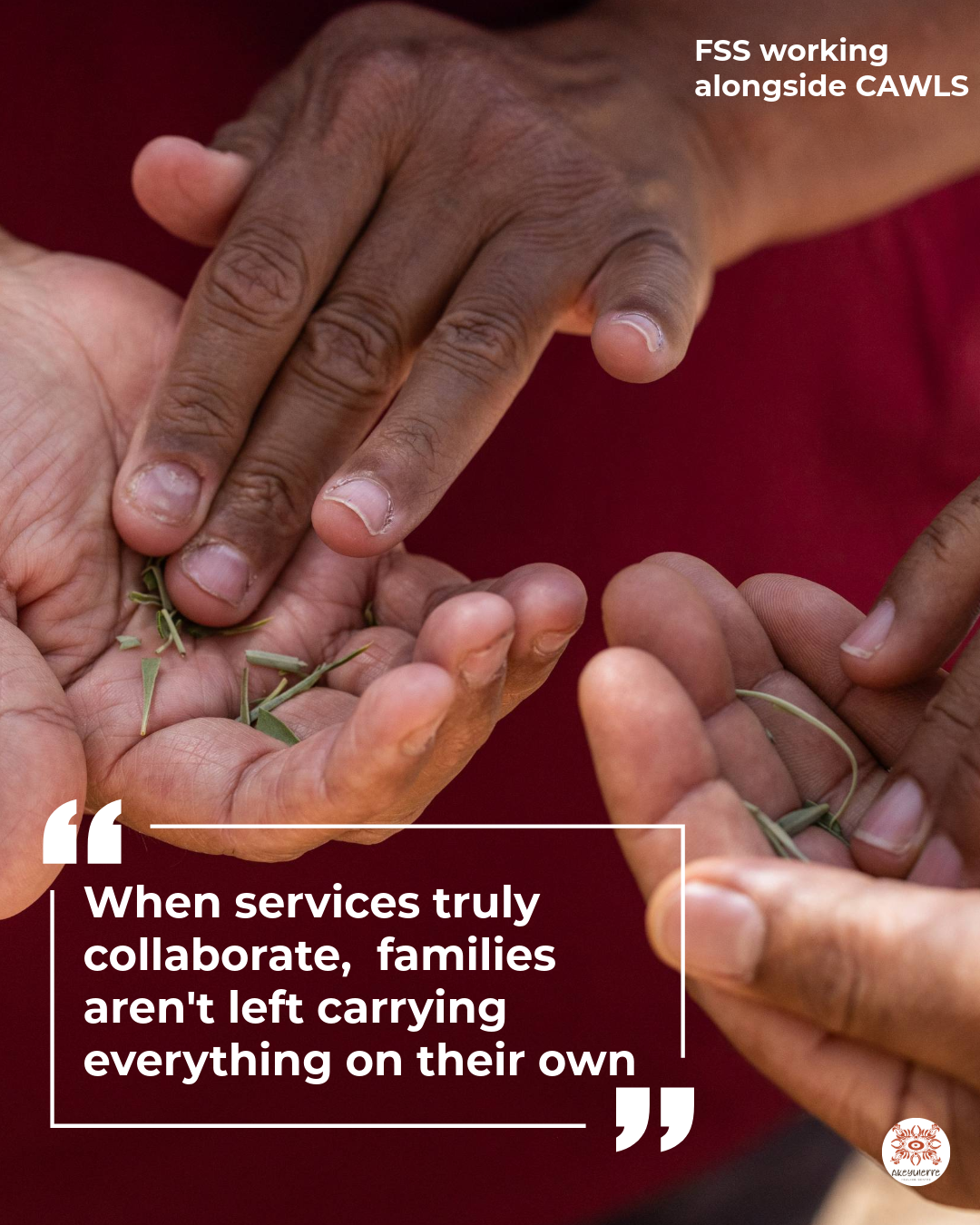
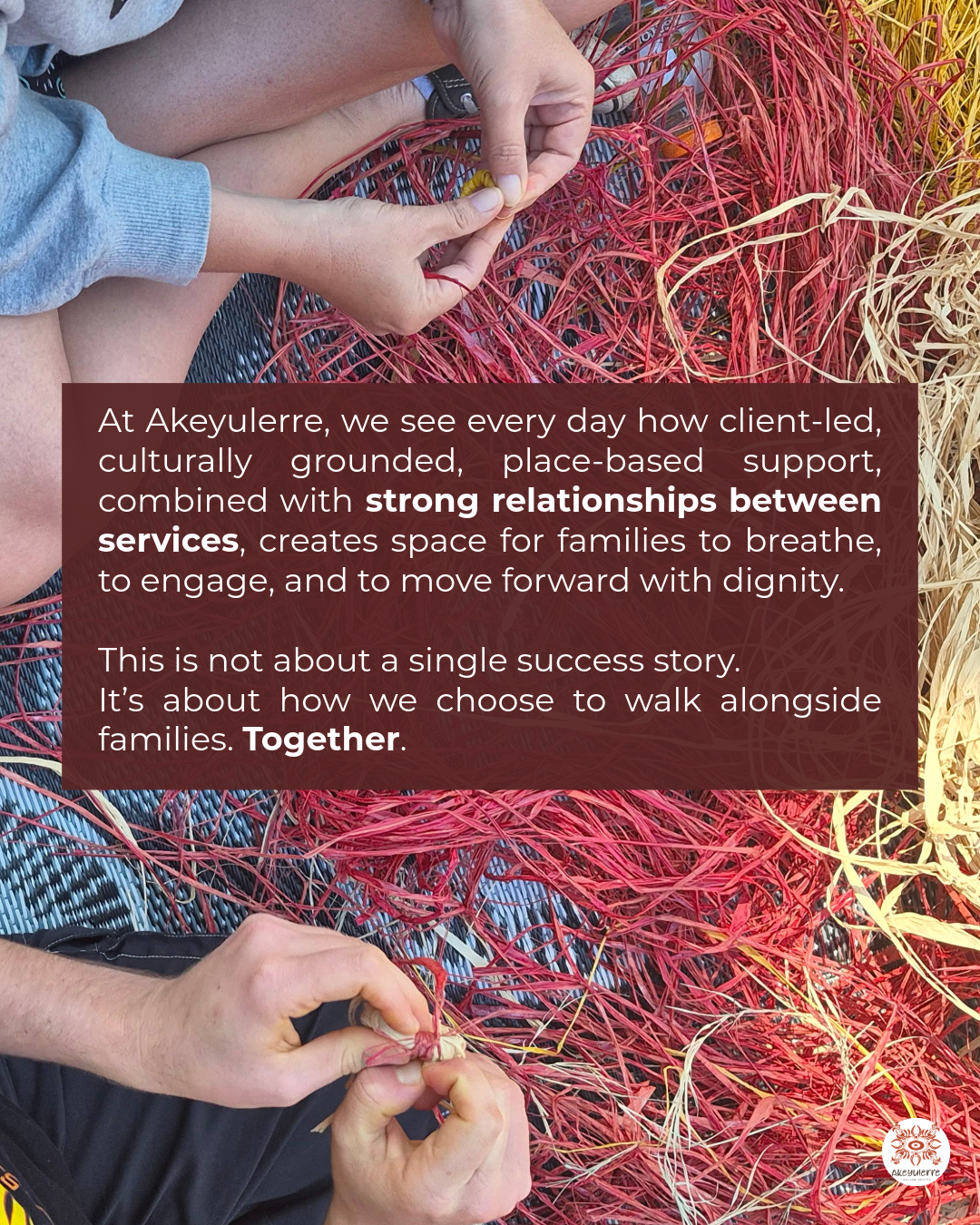
Reflecting on the collaboration, Elise returns to a simple truth. “When services truly collaborate, families aren’t left carrying everything on their own.” Working this way doesn’t remove complexity, but it makes it more humane. At Akeyulerre, we see every day how
client-led, culturally grounded, place-based support,
combined with strong inter-service relationships, creates space for families to breathe, to engage, and to move forward with dignity. This is not about a single success story. It’s about how we choose to walk alongside families.
Together.